How digital marketing works is an important question for beginners, students, and small business owners who want to understand online promotion. Digital marketing uses search engines, websites, social media, email, and online advertising to connect businesses with their target audiences.
Understanding how digital marketing works helps you plan campaigns with a clear purpose instead of publishing content without a strategy. In this guide, you will learn the five essential steps, practical examples, and ways to measure marketing performance.
What Is Digital Marketing?
Digital marketing is the promotion of products, services, or brands through digital channels. Businesses use it to increase awareness, attract potential customers, generate enquiries, and support sales.
For example, a local café can publish its menu online, share updates on social media, improve its local search presence, and advertise special offers. Each activity supports a particular marketing objective.
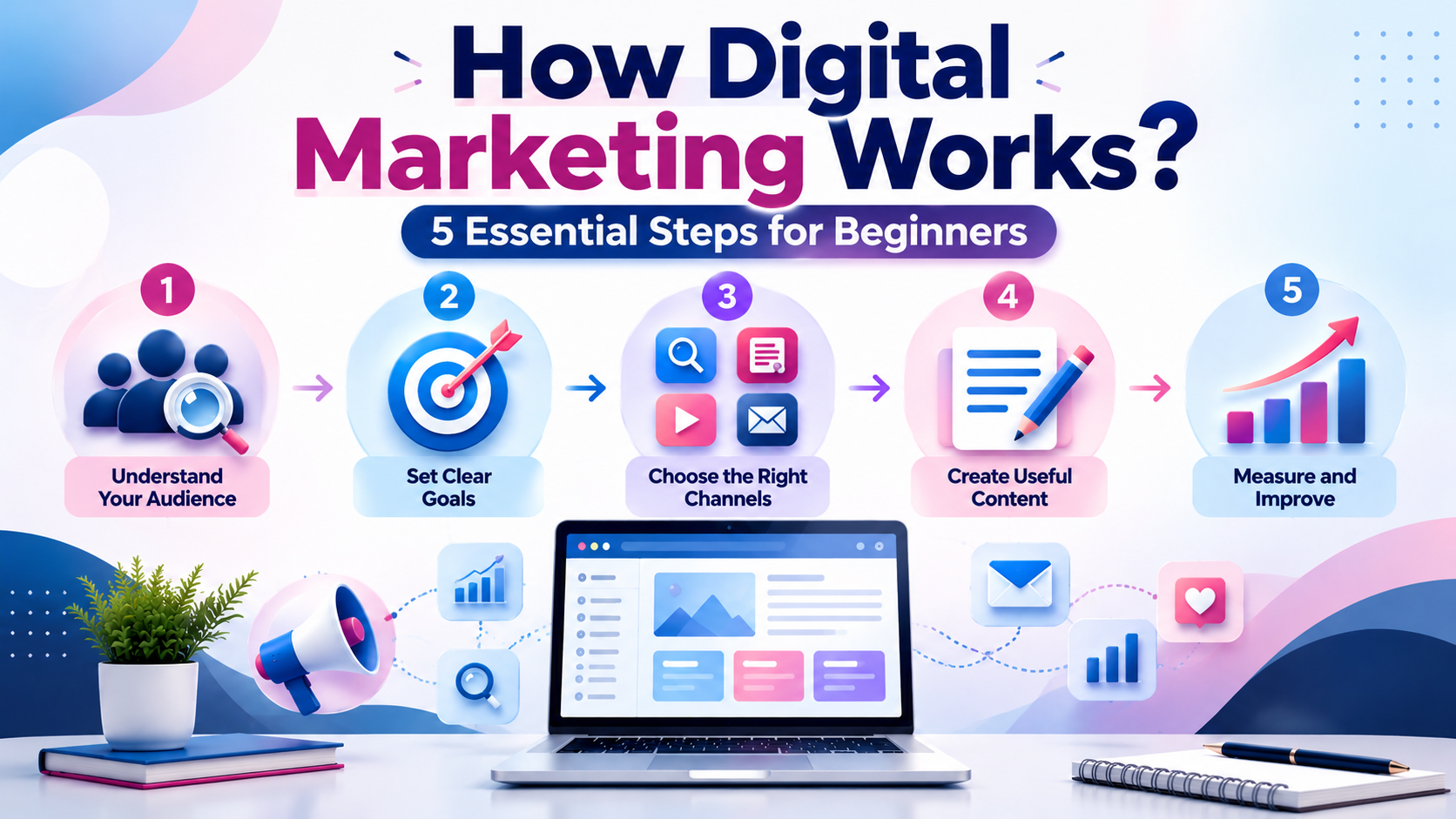
How Digital Marketing Works: The 5-Step Process
The digital marketing process connects audience research, goal setting, channel selection, content creation, and performance measurement.
Step 1: Understand How Digital Marketing Works for Your Audience
Start by identifying the people you want to reach. Learn about their needs, interests, location, questions, and purchasing decisions.
Ask yourself:
- Who is the target audience?
- What problems do they want to solve?
- What information do they search for online?
- Which platforms do they use?
For example, a local clothing store may target nearby customers interested in affordable everyday fashion. Understanding this audience helps the business create more relevant content.
Step 2: Set Clear Marketing Goals
Decide what you want your campaign to achieve. Your goal might be increasing website traffic, generating enquiries, building brand awareness, or increasing online sales.
Choose measurable objectives that match your business needs. For example, you could monitor qualified enquiries received through your website over a defined period.
Clear goals make it easier to evaluate whether your marketing activities are effective.
Step 3: Choose the Right Digital Marketing Channels
Different channels serve different purposes. Choose those that suit your audience, budget, and objectives.
- Search Engine Optimization (SEO): Helps people discover relevant pages through organic search results.
- Content Marketing: Uses articles, guides, videos, and other useful resources to answer audience questions.
- Social Media Marketing: Helps businesses share updates, communicate with audiences, and promote their offerings.
- Paid Advertising: Uses platforms such as Google Ads and Meta Ads to promote products, services, or offers.
- Email Marketing: Helps businesses communicate with subscribers through newsletters, updates, and relevant offers.
You do not need to use every channel at once. Start with the options that best support your main goal.
Step 4: Create Useful Content and Campaigns
After choosing your channels, prepare content that provides value to your audience.
Examples include writing blog posts, creating social media calendars, designing landing pages, preparing email newsletters, and developing advertising campaigns.
Make sure your content communicates a clear message and encourages an appropriate next step. A business promoting a product, for example, should provide useful product information and an easy way for customers to enquire or purchase.
Step 5: Measure Results and Improve
The final step is measuring performance and making improvements. Use metrics that match your objectives instead of focusing only on likes or impressions.
Depending on your goal, monitor:
- Website visits and organic search clicks.
- Relevant enquiries and leads.
- Email subscriptions.
- Advertising conversions.
- Orders and revenue.
- Landing page conversion rates.
Google Analytics can help you understand website activity, while Google Search Console provides information about your website’s performance in Google Search.
Review the data regularly, identify opportunities for improvement, and test changes where appropriate.
How Digital Marketing Works for a Small Business
Imagine a local bakery wants to attract more customers.
First, it identifies nearby people who may be interested in its products. Next, it sets a goal, such as increasing online enquiries. It then improves its website, shares product photographs on social media, and publishes useful local business information.
Finally, the bakery reviews relevant enquiries, website visits, and orders to understand which activities support its goal.
This is an illustrative example, not a real campaign or a claim about actual results.
Common Mistakes When Learning How Digital Marketing Works
Beginners should avoid these common mistakes:
- Starting campaigns without clear objectives.
- Choosing channels without understanding the audience.
- Publishing content that does not answer users’ questions.
- Ignoring website usability and mobile experience.
- Measuring only likes and impressions.
- Expecting immediate results from every marketing activity.
A clear strategy, useful content, and regular performance reviews can help you make better decisions.
Frequently Asked Questions
How does digital marketing work for beginners?
It works through a structured process: understand your audience, set goals, select suitable channels, create useful content, and measure the results.
What is the first step in digital marketing?
The first step is understanding your target audience and identifying what you want your marketing activity to achieve.
Which digital marketing channel is best?
There is no single best channel for every business. SEO, content marketing, social media, paid advertising, and email marketing serve different purposes.
Can small businesses use digital marketing?
Yes. Small businesses can select suitable channels according to their objectives, audience, available resources, and budget.
Conclusion
Understanding how digital marketing works helps you connect marketing activities with clear business objectives. Start by researching your audience, setting goals, choosing relevant channels, creating useful content, and measuring performance.
Continue learning with Dhruvhub’s digital marketing guides on SEO, keyword research, WordPress optimization, and content planning. Practise each concept and use reliable performance data to improve your strategy over time.
Leave a Reply